Natural variation
Grain, density, moisture and colour affect contrast and the appearance of every mark.
CO₂ marking for organic materials
Create permanent logos, serials, production data and traceability marks with a non-contact process that can be automated around your product flow.
Application-led specification
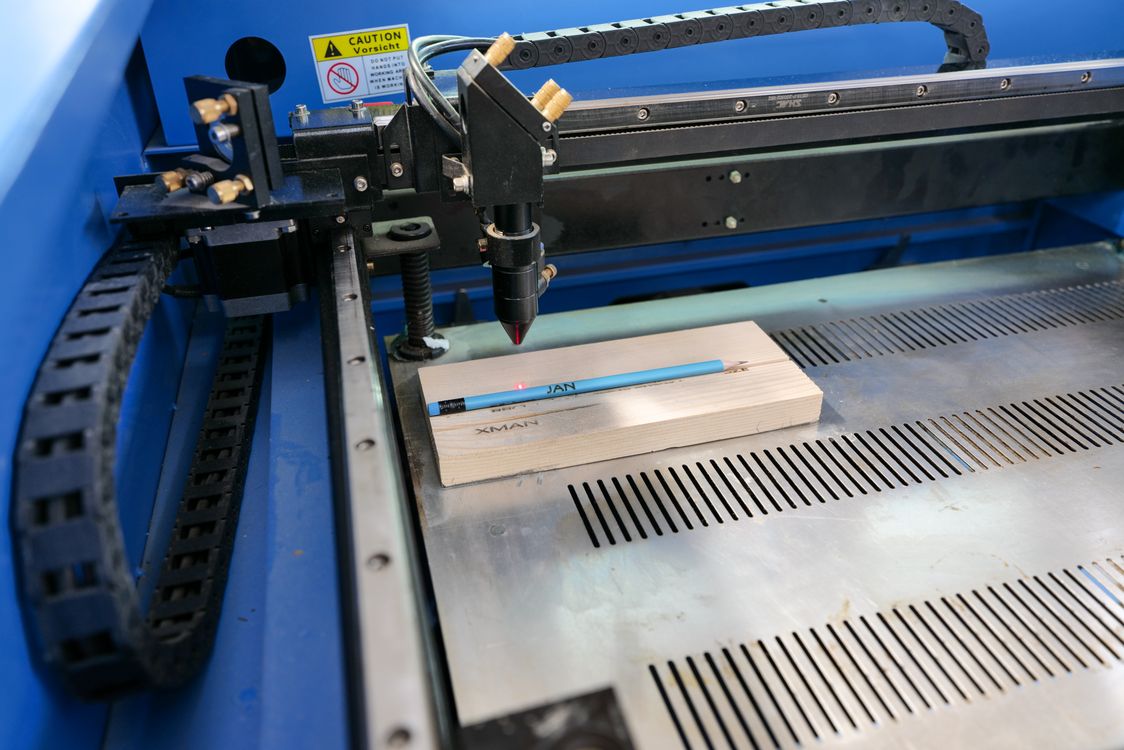
CO₂ lasers are strongly absorbed by many organic materials, making them suitable for marking timber, cork, leather, paper and related substrates. The process can create a darkened, engraved or ablated result depending on the material and settings.
Natural variation in grain, moisture, colour and finish affects consistency. Sample trials help establish the acceptable process window and the extraction needed for smoke and particulate.
What we assess
The substrate is only the start. A reliable production result comes from matching the laser, optics, material response and line conditions.
Grain, density, moisture and colour affect contrast and the appearance of every mark.
Lacquer, paint, oil or coating can change absorption and may create different fumes.
Power, speed and line spacing are balanced to achieve the required visual result.
Fixtures or conveyor guides maintain a repeatable marking position and focus.
Process control, extraction and fire-risk assessment are important for combustible materials.
Smoke, odour and particulate should be captured with application-appropriate extraction.
Sample marking trial
Material colour, coatings, additives, surface condition and line speed can materially change the result. Send representative samples and the code you need. We will use that evidence to guide specification.
Useful trial information: production speed, code dimensions, marking window, product orientation, environment and the quality or verification standard you need to meet.
Typical project scope
Useful specification guides
Planning a laser marking project?
Send us your product, code requirement and line speed. We’ll advise on the right next step.
Request an application review →