Actual samples
Provide enough products to assess variation, different colours, coatings and marking positions.
Prove the application
A representative marking trial turns assumptions about contrast, permanence, code quality and speed into evidence for the final system.
Why trial?
Two packs that both appear to be “the same plastic” or “the same carton” can mark very differently because of colour, coating, additives, surface finish and manufacturing variation.
Testing your own samples helps identify a practical process window and flags risks such as low contrast, heat distortion, glass stress, coating fumes or codes that become unreadable at the intended size.
Important: send representative production samples, not only blank laboratory material. Printed areas, mould variation, coatings and real product geometry all matter.
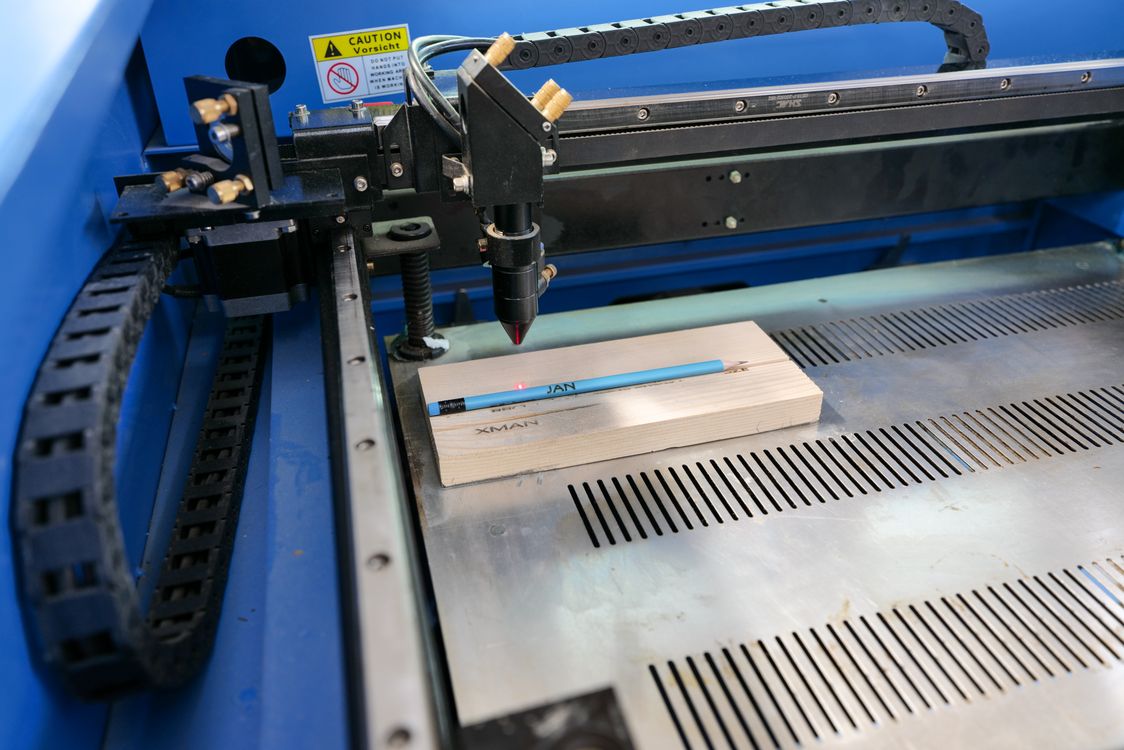
What to send
The closer the test reflects production, the more confidently the result can guide system selection.
Provide enough products to assess variation, different colours, coatings and marking positions.
Send the real text, font, logo, barcode, QR or Data Matrix content and required dimensions.
State products per minute, linear speed, pitch, spacing and whether speed varies.
Identify the target area, orientation, available window and height variation.
Define contrast, permanence, visual quality and any barcode-verification requirement.
Describe dust, moisture, temperature, washdown, extraction limits and access constraints.
Trial output
We use the trial to determine whether CO₂ is a sensible marking technology for the target, which configuration should progress and what further checks are needed.
Where practical, we can discuss marked samples, trial observations and an outline system concept. The exact scope is agreed before testing.
Trial sequence
Request a trial
Include the material, code, production speed and intended position. We will confirm what samples and information are needed.
Planning a laser marking project?
Send us your product, code requirement and line speed. We’ll advise on the right next step.
Request an application review →